Alternatives 


Preferred Alternative Selected

Alternative 2, described below, was selected as the Preferred Alternative for replacement

of the existing bridges.  Selection was based on public input and environmental, social and engineering analyses.  The Preferred Alternative was presented at a Public Hearing

on December 11, 2008. 


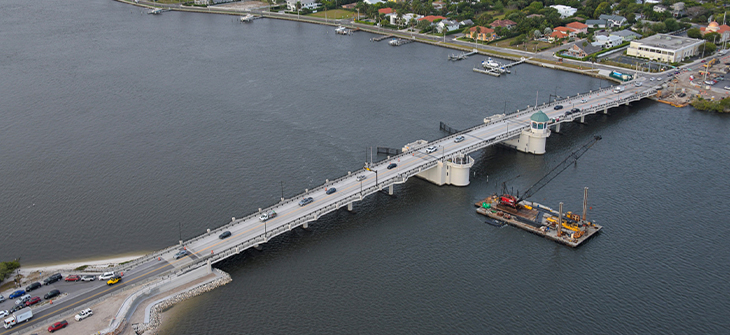
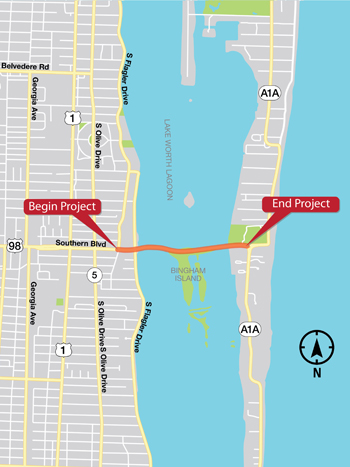
The Preferred Alternative will consist of construction of a new two-lane, 21-foot high bascule (movable) bridge on an alignment north of the existing bridge.  Construction

of a new two-lane tide relief bridge with a vertical clearance similar to the existing bridge will be constructed about 12 feet south of the existing bridge. 


Additional information about the Preferred Alternative can be found in the Public Hearing Handout


Alternatives Considered During the Study


No-Build Alternative – No modifications or major improvements to the existing bridges would occur.  Only routine maintenance and repairs would be performed to keep the existing bridges operating safely.


Advantages of the No-Build alternative include no adverse impacts to historic structures, recreational areas, wildlife and habitat, seagrass and other wetlands.  In addition, no right of way impacts would occur.


The disadvantages of the No-Build Alternative include the following:

·        Narrow sidewalks would remain,

·        No bicycle lanes would be provided,

·        US Coast Guard clearances would not be met,

·        Expensive and disruptive repairs are anticipated within 5 years,

·        After 5 years, the frequency of repairs would increase,

·        Closures to traffic would become more frequent for needed repairs,

·        There would be no improvements to traffic delays at Flagler Drive,

·        There would be no improvements to water quality.


For these reasons, the No-Build Alternative was not selected as the Preferred Alternative but will remain a viable option until after the Public Hearing.


Rehabilitation Alternative – Major overhaul of the existing bridges to keep them open to traffic for an additional 75 years.  Construction of a temporary bridge would be required to maintain traffic during construction.


The advantages of the Rehabilitation Alternative include:

  • Lower initial cost and shorter construction time,
  • No permanent right of way impacts,
  • No direct impacts to historic structures.


The disadvantages of the Rehabilitation Alternative include the following:

  • Narrow sidewalks would remain, and no bicycle lanes would be provided,
  • Substandard vertical and horizontal clearances would remain,
  • There would be no improvements to traffic delays at Flagler Drive,
  • Repairs would affect bridge aesthetics,
  • The temporary bridge will impact seagrass areas,
  • There would be no improvements to water quality.


For these reasons, the Rehabilitation Alternative was not selected as the Preferred Alternative.


Bridge Replacement Alternatives -

All replacement alternatives include replacing the two existing bridges.  No additional travel lanes will be added. The new bridges will be designed to meet current safety and design standards.  The proposed new bridges will also provide an additional left turn lane onto Flagler Drive from the Bascule Bridge, meet US Coast Guard clearance guidelines, and maintain two lanes of traffic during construction.


Three bridge heights were considered for replacement of the existing Bascule Bridge.

  • A fixed bridge providing 65 feet of vertical clearance
  • A bascule bridge providing 35 feet of vertical clearance
  • A bascule bridge providing 21 feet of vertical clearance


35 and 65-foot Bridge Alternatives

Engineering analyses of bridges providing 35 and 65 feet of vertical clearance over the Intracoastal Waterway were conducted.  The results indicate that construction of these alternatives would raise the intersection of SR 80 and Flagler Drive approximately 25 to 44 feet above the existing ground level.  Frontage roads adjacent to SR 80 would need to be constructed to provide access to nearby intersecting roads.


Construction of either of these alternatives would require substantial additional right of way from adjacent properties and result in substantial impacts to the community.  For these reasons, these alternatives were eliminated from further consideration.


21-foot Bridge Alternatives

A bascule bridge providing 21 feet of vertical clearance can be constructed with minimal impacts.  The study team developed and evaluated a number of different alignments for a 21-foot bascule bridge. 


The following alternatives were considered reasonable or “viable”, and were presented at the Public Alternatives Workshop on March 13, 2008.

  • Alternative 1 –Proposes a new bridge on an alignment south of the existing bridge
  • Alternative 2 – Proposes a new bridge on an alignment north of the existing bridge
  • Alternative 3 – Proposes a new bridge on an alignment north of the existing bridge and aligned with the Intracoastal Waterway channel
  • Alternative 5 – Proposes a new bridge on the same alignment as the existing bridge with a temporary bridge to maintain traffic during construction
  • Alternative 8 – Proposes a new bridge on the same alignment as the existing bridge which would be constructed in phases to maintain traffic


All of these alternatives include replacement of the Tide Relief Bridge with a bridge of similar height.  The alignment of the new Tide Relief Bridge would be shifted about 12 feet south to maintain traffic during phased construction.


Evaluation of Alternatives

A detailed evaluation of each of these alternatives was conducted.  Key factors considered included:

  • Public input,
  • the need for additional right of way,
  • visual and noise impacts,
  • impacts to historic structures, recreation areas, community services, adjacent condominiums, residences and businesses,
  • adverse effects on wildlife, seagrass beds and other natural areas,
  •  safety,
  • disruption of access to local roads and emergency services,
  • and construction costs.


Many factors in addition to these key issues were considered.  After careful consideration of many engineering, environmental and social factors, input from local governments, project costs and consideration of all public comments received, Alternative 2 was selected as the Preferred Alternative for replacement of the SR 80 bridges.


Click here to view the Preferred Alternative and other alternatives considered.